Gabi Goslar: The Untold Life of Anne Frank’s Friend’s Younger Sister

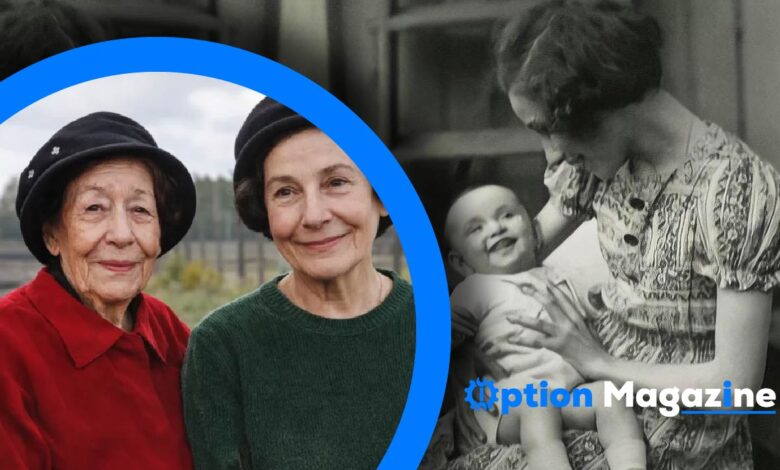
Gabi Goslar was a Jewish child who survived one of the darkest times in history. She was born during World War II and lived through the Holocaust as a very young girl. Many people know her name because she was the younger sister of Hannah Pick-Goslar, who was a close childhood friend of Anne Frank. But Gabi’s story is important on its own.
She survived Nazi camps, lost both of her parents, and lived through the terrifying “Lost Train” in 1945. After the war, she rebuilt her life in Israel and later shared her memories in a book. Her life shows courage, survival, and the power of family bonds.
This article explores who Gabi Goslar was, what she experienced during the war, and how she built a new life after great loss.
Table of Contents
ToggleWho Was Gabi Goslar?
Gabi Goslar was a Dutch-born Jewish Holocaust survivor. She was born on October 25, 1940, in Amsterdam, Netherlands. Her full name was Rachel Gabriele Ida Goslar.
She was the younger daughter of Hans Yitzkhak Goslar and Ruth Judith Klee. Her older sister was Hannah Pick-Goslar. Hannah later became known around the world as one of Anne Frank’s closest childhood friends.
Gabi was only a toddler when Nazi persecution affected her family. She survived Westerbork transit camp, Bergen-Belsen concentration camp, and the dangerous evacuation known as the “Lost Train.” She was just five years old at liberation.
Later in life, she moved to Israel, married, raised a family, and wrote a memoir titled I Have to Tell Someone. She passed away in 2017 at the age of 77.
Early Life of Gabi Goslar in Amsterdam
Gabi Goslar was born into a German-Jewish refugee family. Her parents had fled Germany to escape the growing danger under Nazi rule. They hoped the Netherlands would offer safety and peace.
Her father, Hans Yitzkhak Goslar, had once worked as a high-ranking civil servant in Berlin. He was educated and respected. But when the Nazis rose to power, Jewish families like his were no longer safe. He moved his family to Amsterdam to start again.
In Amsterdam, Gabi’s family tried to live a normal life. Her mother, Ruth Judith Klee, focused on raising her daughters in a loving home. However, life slowly became more difficult as the war spread across Europe.
In 1942, tragedy struck. Gabi’s mother died during childbirth. Reports say she was denied proper medical care because of anti-Jewish restrictions. The baby also did not survive. Gabi was only a small child when she lost her mother.
From that moment, her father had to care for the girls alone. It was the beginning of very hard years.
Nazi Occupation and Its Impact on Her Family
In 1940, Nazi Germany invaded the Netherlands. Life changed quickly for Jewish families. They were forced to follow strict rules. They could not go to public places. They could not attend normal schools. They had to wear identifying badges.
Gabi was too young to understand politics. But she felt the fear around her. Food became limited. People disappeared. Families were taken away without warning.
Her father tried to protect his daughters. He even obtained Paraguayan passports, hoping they might help the family survive. It is not publicly confirmed how effective these passports were, but they showed his effort to save his children.
Even simple daily life became stressful. Jewish families were isolated from society. Fear became part of everyday. For a young child like Gabi, this meant growing up in an atmosphere of uncertainty.
Arrest and Deportation: Westerbork and Bergen-Belsen
In 1943, the Goslar family was arrested. They were sent to the Westerbork transit camp in the Netherlands. Westerbork was a place where Jews were held before being deported to larger camps in the east.
Life there was crowded and frightening. Families lived with constant worry about what would happen next. Gabi was still very young. She depended completely on her father and sister.
In 1944, the family was deported to Bergen-Belsen concentration camp in Germany. Conditions there were harsh. There was little food. The disease spread quickly. Many people were weak and starving.
Gabi suffered from ear infections and hunger. She was small and fragile. Her survival depended heavily on her older sister Hannah and other caring women in the camp.
In February 1945, only weeks before liberation, her father died in Bergen-Belsen. His death left Gabi and Hannah completely orphaned. Gabi was just four years old.
The Protective Role of Her Sister, Hannah Pick-Goslar
Hannah Pick-Goslar was twelve years older than Gabi. During the war, she became more than just a sister. She became Gabi’s protector.
In the camps, Hannah helped feed her. She carried her when she was weak. She comforted her when she cried. Other women also helped care for Gabi when Hannah became ill.
Sisterhood was their strength. Without Hannah’s protection, it is possible that Gabi might not have survived. Their bond was built through shared suffering.
After the war, they continued to support each other as they rebuilt their lives.
Connection Between Gabi Goslar and Anne Frank
Gabi’s sister Hannah was one of Anne Frank’s closest childhood friends in Amsterdam. Before the war, they played together and went to school together.
In Bergen-Belsen, Hannah and Anne met again briefly. They were separated by barbed wire. Anne was weak and ill. Their meeting has become one of the most emotional moments in Holocaust history.
Because of Hannah’s friendship with Anne, the Goslar family became linked to Anne Frank’s story. While Gabi herself did not know Anne personally in the same way, her life is connected to this well-known history.
This connection brought attention to Gabi’s survival story as well.
The “Lost Train” of 1945 and Liberation
In April 1945, as Allied forces approached, the Nazis tried to move prisoners away from Bergen-Belsen. Gabi and Hannah were placed on a train that later became known as the “Lost Train.”
The train traveled without a clear direction. There was almost no food or water. People were sick and weak. Many died during the journey.
After days of confusion, the train was finally discovered near Tröbitz, Germany. Soviet troops liberated the prisoners.
Gabi was five years old at that time. She had survived camp life, starvation, and the dangerous train evacuation.
Her survival at such a young age was remarkable.
Recovery and Life After the War
After liberation, Gabi and Hannah were extremely weak. They received medical care and were taken to a children’s home in the Netherlands.
Healing was slow. They had lost both parents. They had seen death and suffering at a very young age.
Otto Frank, Anne Frank’s father, offered support to the sisters after the war. He was also a survivor who had lost his family.
Eventually, the girls lived with relatives in Switzerland. Slowly, they adjusted to normal life again. But emotional scars remained.
Surviving the Holocaust did not mean the pain disappeared. It meant learning how to live with memory.
Immigration to Israel and a New Beginning
In 1949, Gabi moved to Israel. She was nine years old. Israel had just been established as a new country.
Many Holocaust survivors moved there to rebuild their lives. For Gabi, it meant learning a new language and adjusting to a new culture.
She attended school and grew up surrounded by others who understood trauma and survival. The shared experience helped create a sense of community.
Israel became her permanent home. It was a place where she could build a future.
Marriage, Family Life, and Privacy
As an adult, Gabi married a man named Mozes. It is not publicly confirmed what his full name was. They settled in Petach Tikvah, Israel.
She focused on family life. She raised children and later became a grandmother. She chose a quiet and private life.
Unlike some survivors who became public speakers, Gabi preferred privacy. Her life centered on home and family.
For someone who lost her childhood to war, building a peaceful home was a powerful achievement.
Gabi Goslar’s Memoir: I Have to Tell Someone
In 2010, Gabi published her memoir titled I Have to Tell Someone. In this book, she shared her memories as a child during the Holocaust.
She wrote about losing her parents. She described hunger, fear, and survival in Bergen-Belsen. She also wrote about the kindness of people who helped her.
The memoir helped preserve the voice of a child survivor. Many Holocaust stories are told from adult memory. Gabi offered a different view — one shaped by early childhood.
Her book became part of Holocaust education and remembrance.
Participation in Holocaust Remembrance and Stolpersteine
Later in life, Gabi took part in remembrance events. She returned to Germany for the installation of Stolpersteine.
Stolpersteine are small memorial stones placed outside the former homes of Holocaust victims. They honor individuals by name.
For Gabi, this visit was emotional. It allowed her to publicly remember her parents and reclaim part of her family’s history.
Remembering is an important part of healing. Her participation showed her commitment to keeping history alive.
Later Years and Death
In her later years, Gabi lived quietly in Israel. She enjoyed time with her family. She remained connected to Holocaust remembrance through her story and memoir.
She passed away in 2017 in Israel at the age of 77.
Her death was met with respect from survivor communities. She was remembered as a child who endured unimaginable hardship and still built a life of peace.
Gabi Goslar’s Net Worth and Public Information
There is no public information about Gabi Goslar’s net worth. She was not a celebrity focused on wealth or business.
Her life was centered on survival, family, and remembrance. Any financial details are not publicly known.
Her true legacy is not measured in money. It is measured in memory, testimony, and education.
Conclusion
Gabi Goslar’s life began in fear and loss. She survived camps, starvation, and the “Lost Train” as a small child. She lost both parents but was protected by her sister’s love.
After the war, she rebuilt her life in Israel. She married, raised children, and chose peace over public attention. Through her memoir, she ensured that her story would not be forgotten.
Her connection to Anne Frank through her sister links her to one of the most well-known Holocaust histories. But Gabi’s story stands on its own.
She reminds us that even in the darkest times, survival is possible. Her life shows resilience, memory, and the strength of family.
(FAQs)
Who was Gabi Goslar?
Gabi Goslar was a Dutch-born Jewish Holocaust survivor. She survived Westerbork, Bergen-Belsen, and the “Lost Train” in 1945. She was the younger sister of Hannah Pick-Goslar, a close childhood friend of Anne Frank.
How is Gabi Goslar connected to Anne Frank?
Gabi Goslar was connected to Anne Frank through her sister, Hannah Pick-Goslar. Hannah and Anne were close friends before the war and briefly saw each other again in Bergen-Belsen concentration camp.
What camps did Gabi Goslar survive?
Gabi Goslar survived the Westerbork transit camp and the Bergen-Belsen concentration camp. She also survived the dangerous evacuation transport known as the “Lost Train” in April 1945.
What happened to Gabi Goslar’s parents during the Holocaust?
Her mother died in 1942 during childbirth under Nazi restrictions. Her father was deported to Bergen-Belsen and died there in early 1945, leaving Gabi and her sister orphaned.
Did Gabi Goslar write a book?
Yes, Gabi Goslar wrote a memoir titled I Have to Tell Someone in 2010. In the book, she shared her memories as a child survivor of the Holocaust.
Where did Gabi Goslar live after the war?
After the war, Gabi lived in the Netherlands and Switzerland before moving to Israel in 1949. She later settled in Petach Tikvah, where she built a quiet family life.